





















Great American Songbook Foundation & Academy
The Great American Songbook Foundation is located at the Center for the Performing Arts, and the Finals take place inside the 1,600-seat Palladium in Carmel, Indiana. The Palladium also plays host for several Resident companies including the Actors Theatre of Indiana, Carmel Symphony Orchestra, Central Indiana Dance Ensemble, Civic Theatre, Gregory Hancock Dance Theatre, and the Indiana Wind Symphony. The Center for the Performing Arts has hosted many premieres and pre-Broadway presentations of new musicals including “Mandela,” and is also planned as the site for the first Workshop presentation of the new opera, “IBSEN,” in 2021, the first opera ever written about the great Norwegian playwright, Henrik Ibsen, written by librettist Ronald Rand and composer, Hartmut von Lieres.
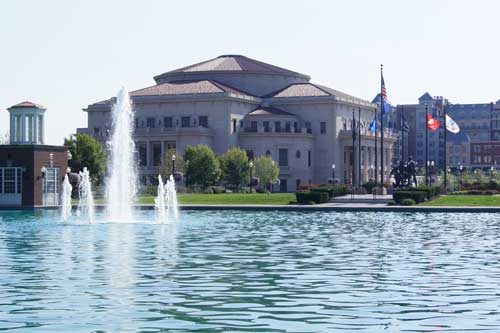
The Palladium, The Center for the Performing Arts, Carmel, Indiana Sadie Fridley, 2019 Winner and newest Songbook Youth Ambassador with Michael Feinstein, founder of the Great American Songbook Foundation.
Michael Feinstein, five-time Grammy Award nominee, founded the Great American Songbook Foundation in 2007 to inspire and educate by celebrating the Great American Songbook – the timeless standards of pop, jazz, Broadway and Hollywood.
The Great American Songbook Foundation advances this rich legacy by curating physical artifacts of its creators, performers and publishers; operating a multimedia exhibit gallery; overseeing the Songbook Hall of Fame; offering programs for the public and research opportunities for scholars and artists; and providing educational opportunities for student musicians, including the annual Songbook Academy summer intensive.
The Great American Songbook Academy summer intensive, the nation’s only youth music program focusing on the timeless standards of jazz, pop, Broadway and Hollywood. In the 10th year of the Great American Songbook Foundation’s flagship education program, forty top high school vocalists from sixteen states, coast-to-coast, came to the Foundation’s home on the campus of the Center for the Performing Arts in Carmel, Indiana in July of 2019.
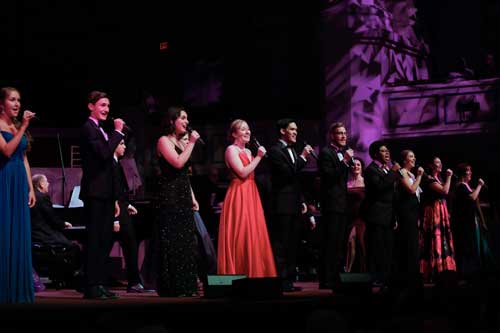
Finals of the Great American Songbook Competition, 2019 at the Palladium
The Great American Songbook Academy summer intensive was fortunate to have among its 2019 professional mentors several extraordinary artists: Michael Feinstein, Melissa Manchester, Sylvia McNair, Laura Osnes, Michael McElroy and Nat Zagree.
Michael Feinstein performing at Feinstein’s/54 Below
in 2017 (photo: Stephen Sorokoff)
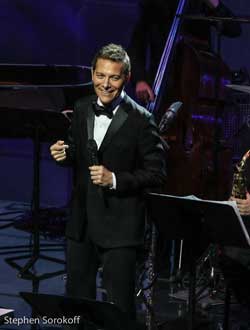 Michael Feinstein is a five-time Grammy Award nominee, Artistic Director at the Center for the Performing Arts and Founder of the Great American Songbook Foundation and the Songbook Academy, who also emcees the week’s public performances. More than an acclaimed singer and pianist, he is recognized internationally for his commitment to the Great American Songbook, both celebrating its art and preserving its legacy for future generations.
Melissa Manchester, actress and Grammy-winning singer-songwriter known for such hits as “Midnight Blue,” and “Don’t Cry Out Loud.” Manchester had performed in Bette Midler’s backing group, the Harlettes, before launching a solo career. Her pop hits also include the Grammy-winning “You Should Hear How She Talks About You,” and Academy Award nominees “The Promise” and “Through the Eyes of Love.” Manchester starred in the national tours of Andrew Lloyd Webber’s “Music of the Night” and “Song and Dance,” and created the role of Maddy, the title character’s mother, on the NBC hit TV series, “Blossom.”
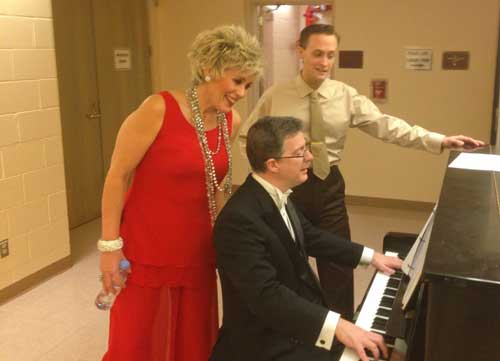
Sylvia McNair preparing
Laura Osnes was seen on Broadway starring in the Tony Award-winning musical, “Bandstand,” “Cinderella,” “Bonnie and Clyde,” “Anything Goes,” “South Pacific,” and “Grease.” She has released two solo albums, toured the country with her Broadway Princess Party concerts and performed with Michael Feinstein, the New York Philharmonic, San Francisco Symphony and the National Symphony Orchestra. She made her film debut in the Hallmark Channel original movie, “In the Key of Love.”
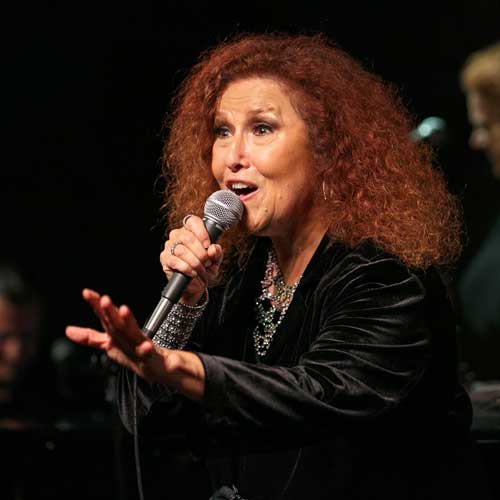
Melissa Manchester
Sylvia McNair, two-time Grammy-winning vocalist whose globe-trotting career spans the worlds of opera, oratorio, cabaret and musical theater. Her journey has taken her from the Metropolitan Opera to the Salzburg Festival, from the New York Philharmonic to the Rainbow Room, from the Ravinia Festival to The Plaza. Ms. McNair appeared as a soloist with nearly every major opera company and symphony orchestra in the world.
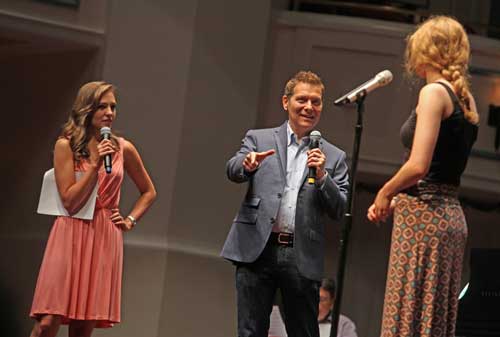
Laura Osnes with Michael Feinstein at a public Masterclass Great American Songbook Academy
Michael McElroy appeared on Broadway in “Sunday in the Park” “Next to Normal,” Rent,” “The Wild Party,” “Big River,” “Miss Saigon” – and in the national tours of “Next to Normal,” “Rent,” “Big River” and “Sarafina!” He is the Founder, musical director and arranger for Broadway Inspirational Voices, a multiracial gospel choir of Broadway performers that received the 2019 Tony Award Honor for Excellence in Theater from the American Theatre Wing.
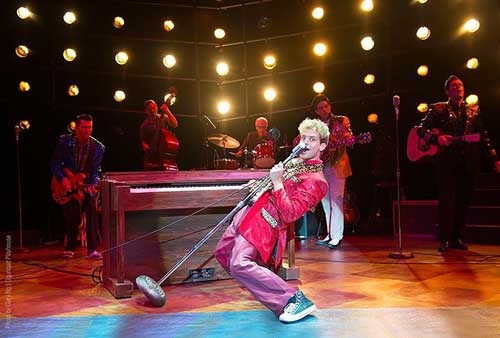
Nat Zegree in “Fly More than You Fall meets Sun Records: Nat Zegree in Concert”
Nat Zegree has performed across the country and was nominated for two Broadway World Regional Awards for his role as Jerry Lee Lewis in Ogunquit Playhouse’s “Million Dollar Quartet.” He recorded and debuted in the world premiere of the Pasek and Paul musical, “Dear Evan Hansen” and has released an album, “Fly More Than You Fall.”
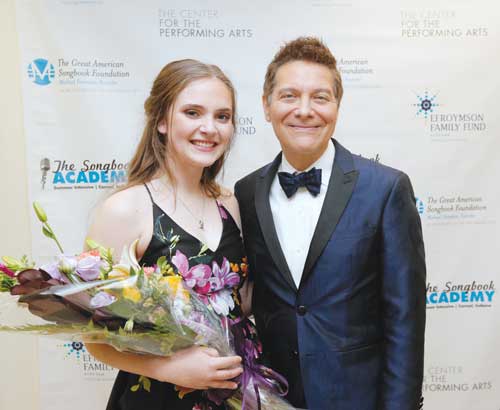
Great American Songbook Academy, Finals 2019 at the Great American Songbook Foundation
At the 10th annual Songbook Academy Sadie Fridley, a student at Fayetteville-Manlius High School, in New York state, received the highest honor as Songbook Youth Ambassador. Fridley said: “I feel really, really honored. Seeing all the incredible talent that was there, I never expected that I would get selected in that way. I definitely went in this year with a more open mind.” Fridley was introduced to jazz by her father and her mother love of musical theater, so Fridley grew up appreciating the music of Judy Garland, Cole Porter and Ella Fitzgerald.
The application process consisted of a pair of audition videos using two Great American Songbook tunes with contrasting styles. Fridley’s renditions of the World War II-era ballad “You’ll Never Know” and “Day by Day” secured her the Academy’s highest distinction at the conclusion of the Saturday night finals concert, which took place in front of a near-capacity crowd at the Center for the Performing Arts.
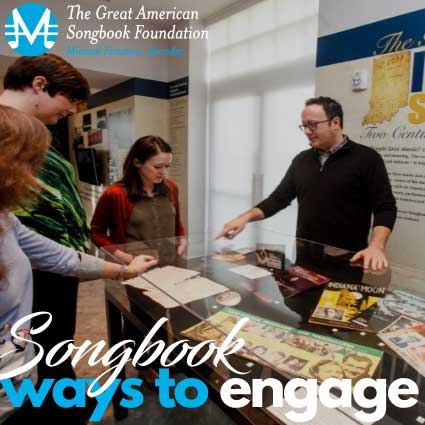
During classes, workshops and rehearsals, professional mentors, music directors and vocal coaches taught music history, performance technique and song selection and interpretation, in preparation for the Songbook Academy Finals concert, where the top high school vocalists competed for titles and opportunities to perform at prestigious venues across the nation.
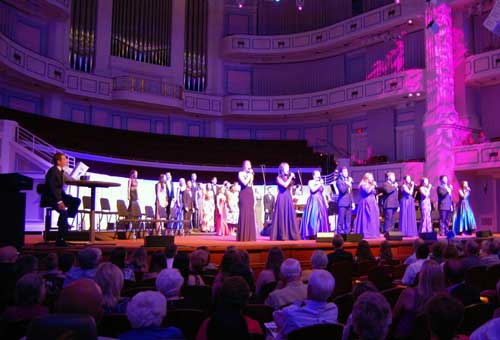
Finals of the Great American Songbook Competition, 2019 at the Palladium
The “Great American Songbook” is the canon of the most important and influential American popular songs and jazz standards from the early 20th century. These popular and enduring songs, created for Broadway theatre, musical theatre and Hollywood musical film between the 1920’s and 1950’s, are often referred to as “American standards”, which are the very cultural treasures that the Great American Songbook Foundation is dedicated to preserving and promoting in our mission and programs.
The Great American Songbook Archives and Library exists to preserve the physical artifacts of the Songbook so that current and future generations can experience them. It is the only facility dedicated to preserving the Great American Songbook and much of the processing is done by a core of faithful volunteers. The archives and library houses hundreds of books, thousands of sound recordings, and tens of thousands of arrangements and pieces of sheet music.
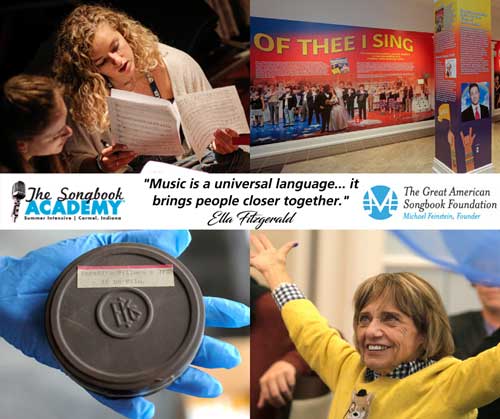
Recent Songbook Academy finalists have performed in major venues in Las Vegas, Pasadena, New York City, Costa Mesa, Washington, D.C., San Francisco, sung the national anthem at NFL games and performed at such venues as Lincoln Center and Carnegie Hall, and with Michael Feinstein in his appearances throughout the nation.
Great American Songbook Youth Ambassadors include Finn Sagal, Brighton Thomas, Julia Goodwin, Julia Bonnett, Annie Yokom, Nick Ziobro, Julia Goodwin, Madelyn Baillio, Lucas DeBard, Brighton Thomas, and Finn Sagal.
Julia Goodwin, the winner in 2013, was featured with Darren Criss, Kelli O'Hara, and Aaron Tveit on Feinstein’s New Years’ Eve at the Rainbow Room special, which was nationally broadcast on PBS in 2014. In September 2015, Nick Ziobro, Julia Goodwin, Maddie Baillio, and Lucas DeBard performed with the American Pops Orchestra on the Millennium Stage at the John F. Kennedy Center for the Performing Arts. These singers also joined Feinstein onstage at New York City’s Carnegie Hall in February 2016.
The Great American Songbook Hall of Fame is a tribute to people who have contributed to the genre, memorializing composers, performers, and lyricists who have added to the history of the Songbook. Tribute performers at past Songbook Celebration Gala events include Jimmy Smits, Andrea McArdle, Jessica Sanchez, Laura Osnes, Karen Ziemba, Chris Mann, and Kristin Chenoweth.
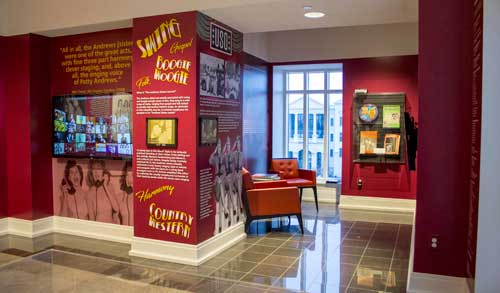
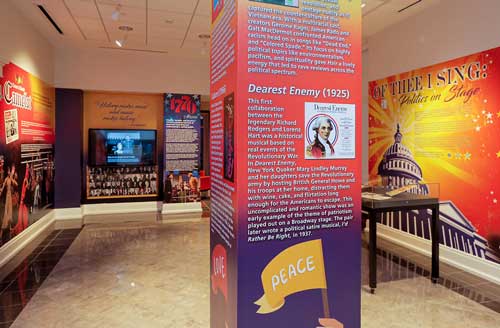
The Great American Songbook Exhibit Gallery on the Gallery Level of the Palladium features rotating installations of images, artifacts and other items from the Foundation's vast Songbook Archives & Library
Great American Songbook Hall of Fame Inductees include Alan & Marilyn Bergman, Barry Manilow, Cole Porter, Liza Minelli, Rita Moreno, Frank Sinatra, Jimmy Webb, NAT King Cole, Shirley Jones, Johnny Matthis, Linda Ronstadt, George & Ira Gershwin, Chita Rivera, Steve Lawrence & Eydie Gorme, Hoagy Carmichael, Diahann Carroll, Dionne Warwick, Ella Fitzgerald, Mitzi Gaynor, Ray Gilbert. Upcoming honorees include Peggy Lee and Meredith Wilson.
The Great American Songbook Archives and Library exists to preserve the physical artifacts of the Songbook so that current and future generations can experience them. It is the only facility dedicated to preserving the Great American Songbook and much of the processing is done by a core of faithful volunteers. The archives and library houses hundreds of books, thousands of sound recordings, and tens of thousands of arrangements and pieces of sheet music.
The Great American Songbook Foundation is an affiliate of the Los Angeles-based Grammy Museum with the Bob Marley Museum in Kingston, Jamaica; the Woody Guthrie Center in Tulsa, The Beatles Story in Liverpool, UK; and the National Blues Museum in St. Louis.
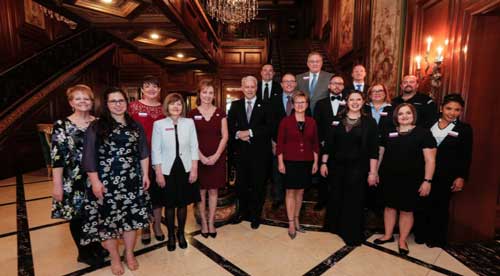
The Great American Songbook Foundation staff
The Great American Songbook Foundation’s Perfect Harmony program, founded in 2015, offers music experiences to people with Alzheimer's, dementia and other neurodegenerative diseases. The Great American Songbook Foundation’s 'Perfect Harmony' program, founded in 2015, offers music experiences to people with Alzheimer's, dementia and other neurodegenerative diseases. Perfect Harmony is a group music program for older adults living with dementia. In partnership with the Greater Indiana Chapter of the Alzheimer’s Association, 'Perfect Harmony' offers a unique opportunity for social and musical engagement, and promotes holistic well-being through music.
The Great American Songbook Foundation also partnered with Indianapolis-based Heartland Film and the Center for the Performing Arts to present classic movie musicals to the public, cultivating a new generation of movie lovers. Some screenings included guest speakers, who enlightened audiences on the nature and creation of the movies shown.
Michael McElroy
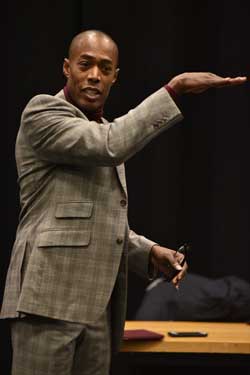 The Great American Songbook Archives serves as a repository for the papers of significant Songbook figures including Meredith Wilson, Hy Zaret, and Gus Kahn, as well as special collections covering such artists as The Andrews Sisters. The Foundation’s non-circulating library houses a wide variety of reference and an Archives containing over one hundred collections, thirty-five thousand pieces of sheet music, and three thousand reference books.
Items housed in the Foundation's Archives include: seven thousand audio recordings in thirteen different formats, including Rudy Vallee’s radio transcription discs dating from 1932, Meredith Wilson’s personal papers, scripts, and recordings, including “The Music Man” and “The Unsinkable Molly Brown,” musical orchestrations from Bob and Dolores Hope’s decades of live performances across the globe, the piano which was used by composer Richard A. Whiting to write “Hooray for Hollywood,” and Hy Zaret’s original lyrics for “Unchained Melody,” one of the twentieth century's most frequently recorded songs.
The Songbook Academy is sponsored nationally by the Efroymson Family Fund, a fund of the Central Indiana Community Foundation, with additional support from the City of Carmel. The Public Masterclass and Songbook Showcases are sponsored by Ruth’s Chris Steak House. The Finals concert is presented by the Center for the Performing Arts and sponsored by Salon 01 and Current Publishing LLC. For info: Great American Songbook Foundation & Academy is located at The Centre for the Performing Arts 1 Center Green, Carmel, Indiana 46032, (317) 844-2251 The Songbook.org
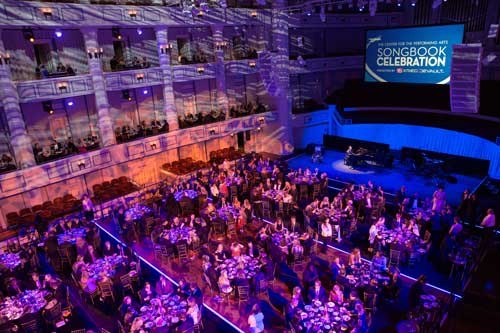
Great American Songbook Foundation Induction Party, The Palladium, Carmel, Indiana
