





























Psalmayene 24
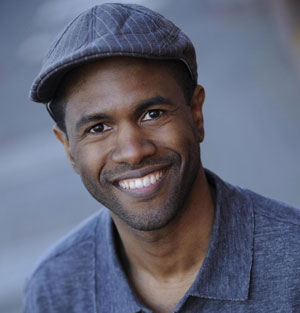 is an award-winning playwright, director, and actor. Psalm – as his colleagues call him – is currently the Andrew W. Mellon Foundation Playwright in Residence at Mosaic Theater and the Doris Duke Artist-in-Residence at Studio Theatre. He is currently the host of Studio Theatre’s “Psalm’s Salon at Studio,” an online interview-based series that celebrates and examines culture through a Black lens. Psalm is one of the writers of Arena Stage’s coronavirus pandemic time capsule film, “May 22, 2020, Psalm wrote “Double Entendre”, the fifth episode of Roundhouse Theatre’s ten-part pandemic influenced web series, “Homebound.” His plays include “Les Deux Noirs” (2020 Charles MacArthur Award, nominee for Outstanding Original New Play-Capital Grant) - world premiere, Mosaic Theater Company; “The Frederick Douglass Project” which included his play, “An Eloquent Fugitive Slave Flees to Ireland,” with Irish playwright Deirdre Kinahan’s play, (first play produced on a pier at The Yards Marina, Washington, D.C. (recipient of six 2019 Helen Hayes Award nominations); a one man play, “Free Jujube Brown!,” recognized as a seminal work in Hip-Hop Theatre, published in the anthology, Plays from the Boom-Box Galaxy: Theater from the Hip-Hop Generation; his Hip-Hop Children’s Trilogy with premieres at Imagination Stage, exploring the past, present, and future of hip-hop culture, includes “Cinderella: The Remix at Imagination Stage,” “Zomo The Rabbit: A Hip-Hop Creation Myth” and “P.Nokio: A Hip-Hop Musical” (receipient – NEA and Walt Disney development grants, two Helen Hayes Award nominations for Outstanding Production, TYA). As a director, his productions include Antoinette Nwandu’s “Pass Over” at Studio Theatre, Nambi E. Kelley’s “Native Son” at Mosaic Theater Company, Marc Bamuthi Joseph’s “Word Becomes Flesh” (recipient of five 2017 Helen Hayes Awards, including Outstanding Direction of a Play) at Theater Alliance, Young Jean Lee’s “The Shipment” at Forum Theater, the world premiere of The Welders production of “Not Enuf Lifetimes” by Caleen Sinnette Jennings; and the Mead Theatre Lab production of The Hueman Prophets’ “Read: White and Blue,” and he directed theater ensembles in India, Croatia, and Bosnia and Herzegovina as part of Arena Stage's Voices of Now program. He was the assistant director of The Living Stage Theatre Company. Psalm is the recipient of the Imagination Award from Imagination Stage, and has received commissions from the African Continuum Theater Company, Arena Stage, Imagination Stage, The Kennedy Center, Theater Alliance, Solas Nua, Mosaic Theater Company, and Theatrical Outfit. He has also received grants from the Maryland State Arts Council, DC Commission on the Arts & Humanities, and the Boomerang Fund for Artists Inc. As an actor, Psalm played Fortune in Arena Stage's “Ruined,” was a nominee for a Helen Hayes Award(1999, Outstanding Lead Actor in a Musical), and appeared on HBO’s “The Wire.” He is currently featured in “Destination D.C.”’s film segment highlighting theatre in Washington, D.C.
How have you found a creative way to deal with the enormity of the current crisis including everything happening across the country and the world?
Initially, when the pandemic first hit the states and we were instructed to shelter in place, I found refuge in writing. I swan-dived into a few different projects that I was juggling, and I’d also occasionally write down random thoughts related to the pandemic. It was therapeutic.
For the most part, this was a highly effective way for me to maintain my sanity when reality as we knew it had been so dramatically upended. Then the recent spate of high-profile killings of Black people in America took place. Ahmaud Arbery. Breonna Taylor. And the one that garnered global outrage – George Floyd. Writing helped, but it wasn’t quite enough to help me manage the weight of these tragedies.
So, I started going to a regional park a short drive from my home. I go there several days a week now and it always clears my mind and uplifts my spirit. Unlike anything else, connecting with nature has helped me transcend the difficulties of this moment.
I understand you started out as an actor. How did that lead into your becoming a playwright?
My transition from acting to writing was organic. When I wrote my first play, a two-hander titled “The Hip-Hop Nightmares of Jujube Brown,” co-written with the fabulous Toni Blackman, I was also an actor with the Living Stage Theatre Company in Washington, D.C. Living Stage’s method of performance was rooted in dramatic improvisational acting. We had a general structure that we would rehearse for each piece, but the dialogue was largely improvised. This approach to acting helped me hone my instincts as a writer because when you are improvising as an actor you are essentially writing – whether you realize it or not.
So, after I did the two-hander, I decided to write my first solo play, “Free Jujube Brown!” I wrote that play a few months after the September 11th attacks. It was partly a gut-level creative response to the enormously destructive acts of 9/11. Also, I was frustrated with the limited and often stereotypical roles that were available for Black actors, so I chose to write my own material.
After I began performing “Free Jujube Brown!,” I started to get noticed as a writer and theaters eventually set about offering me commissions.
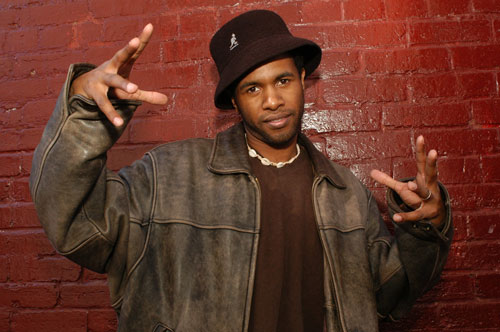
Psalmayene 24 in his play, “Free Jujube Brown: at Kalamazoo College
Naturally, my readers will wonder how you chose your name as a playwright. What led you to settling upon it?
I’ve always been fascinated by blurring the boundaries between art and life. I invented the name during a period in my life when I was doing music as a singer/songwriter in the early 1990’s in Washington, D.C. I liked the curiosity the name engendered, so I decided to also use it for my work as an actor, playwright, and director.
My intention was to jolt people out of the status quo and lure them into a creative space beyond the mundane, humdrum rhythms of everyday life. It’s also a radical gesture of self-definition and a reminder that the option to create oneself is always present.
You had a memorable production of “Les Deux Noirs” using multimedia, hip hop, and rap as two twentieth-century literary giants and philosophers famed writers Richard Wright and James Baldwin in their legendary 1953 confrontation in a Paris café in its world premiere at Mosaic Theater Company. What led you to these two writers and did they have an influence on your life and writing?
I was in pre-production for directing Nambi Kelley’s adaptation of “Native Son” at Mosaic Theater when the artistic director, Ari Roth, asked if I would be interested in writing a response play to “Native Son” that would run in repertory with it. During my research for Native Son, I stumbled across an account of a 1953 confrontation between Baldwin and Wright at Les Deux Magots – a famed café in Paris.
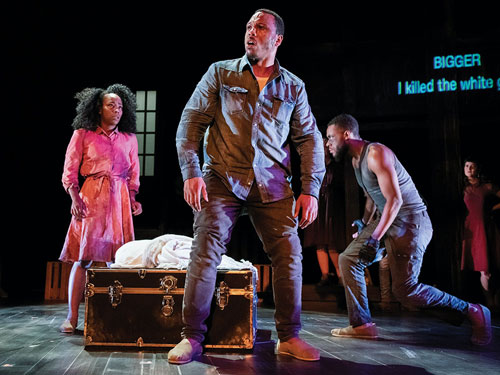
Nambi E. Kelley’s “Native Son,” produced by Mosaic Theater Company directed by Psalmayene 24
I was inspired and felt like this little known piece of literary history had enough verve to launch me into writing a play, so I agreed to do it. Richard Wright’s fearlessness as a writer encourages me to continually venture outside of my own comfort zone – on the page and in life. James Baldwin’s timeless virtuosity with language and his truthful, revelatory thoughts on race in America serve as guiding lights for my work as a writer and somehow make me want to be a better human being.
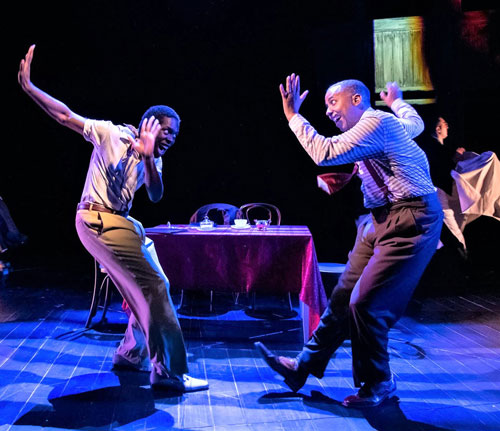
Psalmayene 24’s play, ““Les Deux Noirs,” production at Mosaic Theater Company
What was the collaboration like working with Raymond Caldwell like? Did you attend rehearsals? Do you rewrite any of your plays during rehearsals?
I love collaborating with Raymond. He has directed three of my plays with a fourth, “The Blackest Battle,” on the way as soon as the pandemic subsides and we can gather and do live theatre again. I did not attend many rehearsals for “Les Deux Noirs” because I was in rehearsals and previews for “Native Son.” But I typically prefer to give directors space and not attend too many rehearsals because sometimes a playwright’s presence in the rehearsal room can create an unhelpful type of pressure on the director and actors.
I did some rewriting for “Les Deux Noirs” during the rehearsal process, but not much because we felt that the play was in good shape for a first production. In general, the rewriting I do on a play during rehearsals varies depending on the state of the play and the circumstances during the rehearsal period.
What dd you learn from the experience of your play coming to life by Mosaic Theater Company?
My primary takeaway from the world premiere production at Mosaic was that the voices of James Baldwin and Richard Wright are as relevant today as they were during their lifetimes – maybe even more so. I think that’s the mark of a truly great writer: the potency of their voice doesn’t get diluted over time but becomes more robust.
Also, through this production I was reminded anew of the power of language to transform one’s life and bend reality. Wright spoke about the use of words as weapons and Baldwin spoke about the alchemizing function of language. As a result of “Les Deux Noirs,” my own relationship with writing was reinvigorated and elevated.
You also wrote, directed, and stared in “P.Nokio: A Hip-Hop Musical,” a reimagining of the classic tale of Pinocchio. You’ve said part of your mission is to illuminate the infinite creative and artistic potential of hip-hop? Why does it mean so much to you?
I just want people to know the truth about hip-hop culture. It’s a panoramic art form with the ability to express the fullness of the human experience. But if you’re not adept at using its artistic elements or if you have a limited perspective on what hip-hop is, then you will perceive hip-hop as strictly a vulgar, violent, materialistic, and misogynistic musical genre. It’s so much more than that. It’s more than what you hear on mainstream radio. It’s more than what you see in pop song videos.
I grew up in Brooklyn, New York during the formative years of hip-hop culture, so I experienced first-hand the breadth of the culture. I want to share the richness of hip-hop that I experienced growing up so that people can view the creators of this culture in a more human light.
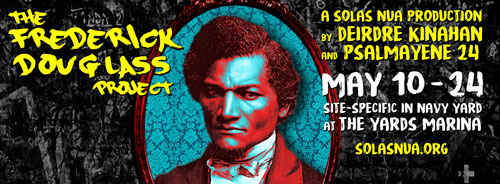
For the first time in DC history, Solas Nua, just a stone’s throw away from Douglass’ historic home at Cedar Hill, staged on a pier at the Marina, to commemorate Frederick Douglass’ 1845 voyage to Ireland and the bicentennial of his birth, “The Frederick Douglass Project” consisting of two short plays. Your play “An Eloquent Fugitive Slave Flees to Ireland” and “Wild Notes” by Irish playwright, Deidre Kinahan. Definitely the downpour during the performance added to the drama plus the lushness and real-time D.C. spoke volumes as both plays played out. Both these plays certainly showed how powerful theater can be in the struggle for change in our society. Did Frederick Douglass change to you as you wrote the play? And what role do you feel Theater can bring now to impact on our times?
My impression and understanding of Frederick Douglass definitely changed while I wrote “An Eloquent Fugitive Slave Flees to Ireland.” Like many people, I had a grand and monumental view of Douglass prior to writing the play. He was closer to a stone statue than a real person. But as I wrote, something strange happened: he became simultaneously humanized and larger than life once more.
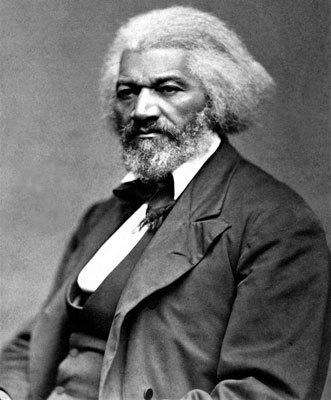
Frederick Douglass, 1879, National Archives
His journey from bondage to freedom during a time when chattel slavery was still legal in America exposed the pain he suffered and also threw his determination and heroism into high relief. I used this dual notion of Douglass as a springboard into my characterization of him in the play. I think theater has the potential to not only humanize mythic figures like Frederick Douglass, but it also has the ability to reveal the nobility and divinity that I believe exists within us all.
Ultimately, I think the function of theatre is to illuminate the human condition in a beautiful way. If we, as theatre artists, can achieve this, then I believe we can profoundly impact people.
Did playwrights and poets such as Ntozake Shange, Susan Lori-Parks, August Wilson, Ed Bullins, Maria Irene Fornes, Lorraine Hansberry and Amiri Baraka play a role in how you see playwriting and putting words down on the page to tell a story?
Just about all of these artists have influenced me in some way, but Ntozake Shange and August Wilson have probably been the most influential in terms of my approach to playwriting, Ntozake Shange made me see that you could write plays in a style and vernacular that was unlike anything in mainstream theatre and it could still connect deeply with a broad audience.
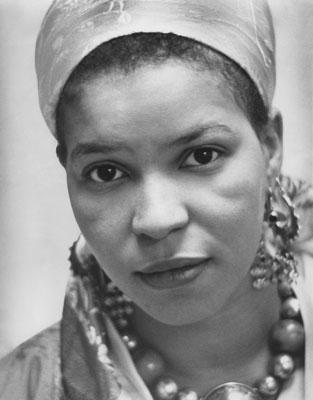
Ntozake Shange, at Reid Lecture, November, 1978, photo: Chris Woodrich
And August Wilson exemplified the value of telling stories rooted in the Black experience. Ntozake and August are my theatrical ancestors, and I hope to inspire future generations of artists the way they have inspired me.
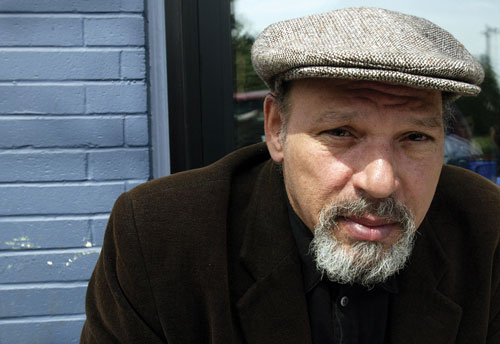
August Wilson
