












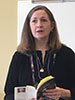


Sylvia McNair
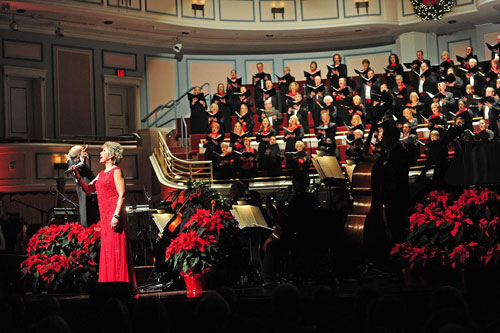
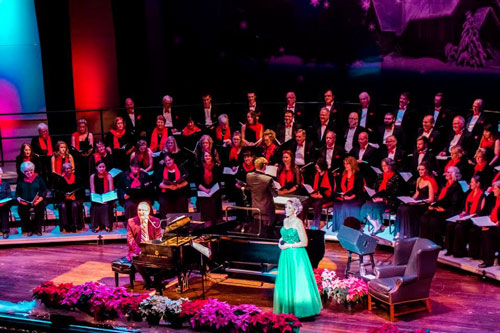
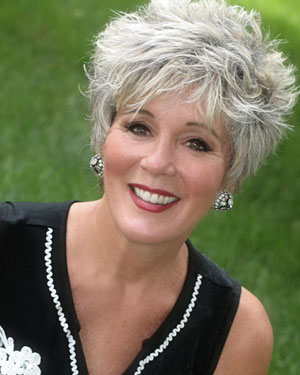 is a two-time Grammy Award winner and has enjoyed a three-decade career in opera, oratorio, cabaret and musical theater. Ms. McNair made her professional concert debut with the Indianapolis Symphony Orchestra while still a student. She made her operatic debut in 1982, performing as Sandrina in Haydn’s “L’infedelta Delusa” with the Mostly Mozart Festival. Ms. McNair appeared regularly at the Vienna State Opera, Salzburg Festival, Royal Opera House at Covent Garden, Santa Fe Opera, San Francisco Opera, the Metropolitan Opera, and as a solo performer with many major European and American orchestras. As a faculty member, she taught at the Jacobs School of Music at Indiana University. From 2012 to 2019, Ms. McNair served as a judge and mentor for the Songbook Academy, a summer intensive for high school students operated by the Great American Songbook Foundation founded by Michael Feinstein. More recently, Ms. McNair has performed cabaret performances with the music of Gershwin, Porter, Sondheim and Bernstein at many venues including at New York City’s Algonquin Hotel’s Oak Room, the Rainbow Room, The Plaza Hotel and at the Ravinia Festival. She released over seventy albums, including two American Songbook recordings with pianist Andre Previn. Her newest release is “Subject to Change.”
You’ve been a large part of the Songbook Academy, an amazing summer intensive program for high school singers performing the Great American Songbook in Carmel, Indiana. What first brought you to be a part of the Great American Songbook, and why has it mean to you?
This is the eleventh-year anniversary of the Songbook Academy, and I’m pretty sure it’s my tenth year participating. Michael Feinstein, who created it, has one year on me. Working with the high school students for a week every July has been a great experience for me. I also feel safe in saying it's been a positive experience for all of us: students, teachers, mentors, guest artists and administrators.
Michael and I have been friends since 1998. We met in Washington DC where we were performing a concert at the United States Supreme Court, by special invitation of Justice Sandra Day O'Connor. I’m so grateful for our continued friendship and especially his mentorship to me!
You’ve certainly had an amazing opera career, and then you’ve said, “When I decided to sing my heart, everything changed.”
Yes, I have a long history in classical music, having studied piano and violin since I was a young child. I made my living for twenty years as an opera singer, singing at the Metropolitan Opera as well as opera companies in Salzburg, Vienna, Berlin, London and San Francisco. As the years rolled on, the expectations became greater and greater, and so did the stress.
I was in my middle-forties and realized I couldn’t continue to carry the same workload any longer. I was tired of constant travel and I was burned out on opera. In a moment of brutal honesty, I admitted I wanted to spend whatever was left of my singing days doing music I feel I was born to sing. I learned how to do opera but when I’m singing the American Songbook, I feel more true to my singer-self. I love to sing in English, and I deeply love singing the Songbook.
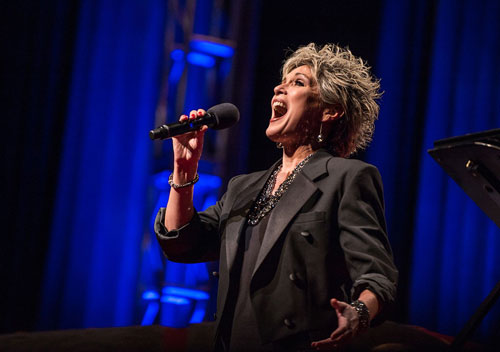
One of the phrases you’ve said as a teacher is: “Words first, music second.” What do you mean by that?
“Words first, music second” has several meanings to me. 95% of the time, the words existed before the music existed. Not often did composers write melodies first and then have lyricists write words to match. It did happen, but not very often.
As an artist, I have always approached music by learning the words first and the melody second. Even in opera! Especially in opera, where I was so often singing in a language I was not able to speak fluently. I approached everything by learning the texts first. I love words! I love using words to connect with people.
Words are the one thing singers have that instrumentalists do not. If singers don’t enjoy words, or don’t enjoy using words to express a song, I suggest they go study trombone! That’s what's gotten me into trouble with voice teachers!
Did singing begin early in your life?
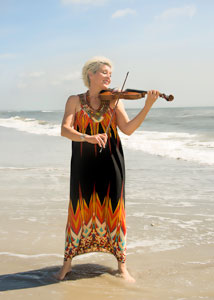
My parents were both musicians. My mother was a music teacher for thirty-eight years in the public schools and she also had long list of private piano students. Saturdays at our house began early and ran long! Piano students were in and out all day. My father was a musician by avocation, so there was always a lot of music in our home. Mom sat me on the piano bench for lessons when I was just three years old. Then I added violin to my daily practice regimen when I was seven.
I began taking singing lessons in college. But college being college, I wasn’t as serious about it as I should have been. Somehow, I managed to win the National Metropolitan Opera Auditions in 1982 and after that, things started rolling. I was one of the lucky ones, I didn’t have to do a lot of kicking down doors. Many of them just opened for me.
So, I walked through. Sometimes I had to run through, just to keep up with the assignments. And, so it went for twenty years. But then the questions and answers all started changing. “Is this really what I want?” “Is this who I am?” “Do I still really love this?” When I answered those questions honestly, I realized I needed to make a shift and head myself in a slightly different direction.
“If you follow your heart you cannot go wrong.” I’ve read it, I’ve heard people say it, I want to believe it. When I decided to leave opera, I walked away from good contracts in fancy places. I took a flying leap off the edge of a cliff not knowing if musical theater companies would hire me or if cabaret performances would open up for me.
And the truth is, the transition did not exactly go according to my dreams. My singing career in musical theater, cabaret and symphonic pops did not ever grow to be what my career in classical music had been. I made my way in that world for fifteen years, and had some wonderful experiences!, but I never made it to the same level. I feel sad about that, but I know that following my heart was the right choice.
What has it meant to you teaching and working with high school students at the American Songbook Academy?
It’s interesting to work with high school students today knowing they were born in the 21st century! When they come through the door to sing lyrics by Johnny Mercer, Ira Gershwin or a song by Jerome Kern, they can only bring their fifteen or sixteen-year-old life experience to the song.
But they still know about love, they know about heartache, loss, they understand themes of songs. So, they have experiences in their own life histories to help them get inside a lyric.
The forty singers who come to the Songbook Academy every July are vetted by an extraordinary team of teachers and, by the time we cull it to ten Finalists; we are hearing very mature performances by very talented kids! They are certainly a lot smarter than I was when I was sixteen.
I think it’s a great gift that today’s young people have this unique opportunity to sing songs by the great masters of the Great American Songbook.
That is one of the parts of the mission statement. We want to make sure this music is able to come alive in the hands of the 21st century singer. Michael Feinstein and I have had conversations about the American songbook, and I feel we need to keep adding more and more material to it. Maybe 1965 should be our cutoff; we have to keep reinventing the parameters.
There are so many great songs being written in the 21st century. How do you define the Great American Songbook? What is that best time frame? I think we may end up extending that closing bracket at some point.
It must be a great learning experience for you as a teacher?
Mrs. Anna, in “The King & I,” famously says: “By my students I am taught.” How true! I do believe that teaching is the best teacher.
When I joined the faculty at Jacobs School of Music and started teaching Singing, Stage Awareness and English Diction for Singing, I clearly met up firsthand with that statement. It’s really true. I sing so much differently since I started teaching singing. You hear yourself telling the students: “When you stand there, lift your top of your jaw and make sure the air is flying around on your palette,” and when you say these things, it makes you realize you better practice what you teach.
You have also given yourself to help others through important causes. ‘Songs By Heart,’ connecting people with memory loss to the joy of music, which you and singer Nancy Gustafson co-founded to bring singers and song into nursing homes and memory-challenged residences; ‘Christel House International’ founded by Christel DeHaan touching the lives of 5,000 impoverished children at Christel House learning centers around the world; and the ‘Bloomington Refugee Support Network.’
 I know I am both lucky and blessed. When I look back on my life, I sort of see it in three chapters. The first chapter was growing up, being trained, learning as much as I could.
The second chapter is figuring out how to make the most of it all! I was given so much by my parents and I had excellent teachers. I knew I had a big responsibility to be a good steward of my talent and of all the investment in education my parents made. So, I sang my heart out all over the world for thirty-five years. The last ten of those years, I taught on a music school faculty. I hope I was able to share with young singers much of what I learned. Doing it is great, sharing it is even greater!
The third chapter is the one I’m in now. At sixty-three, I want this chapter to be about service. I want to be useful to others. If that’s teaching singing, great! But I also enjoy my retirement career teaching ENL (formerly known as ESL) to international students. I enjoy .’ I try to live every day guided by the principle: Give whatever you can, wherever you can, whenever you can. That is my goal now.
